

Last updated on July 2, 2025
Feng Shui for cats is an important consideration because, like humans, our pets are affected by the energy around them. Whether it’s a cat, a dog, or even a hamster, all of them are living beings with active cells. Their bodies, just like ours, are constantly influenced by cosmic or heliocentric energy. That’s why the Feng Shui of your home plays a role in their well-being, too.
If you do Feng Shui for pets in your home, you might already know that achieving a balanced energy flow is key to creating harmony for all family members. While the main focus is often on your spouse and kids, pets are sometimes forgotten during the planning and adjustment process. The energy that affects us humans also impacts our pets, creating either harmony or disharmony depending on the energy dynamics present at any given time.
Yes, Feng Shui will positively influence your pets well-being if it’s done correctly. As a Feng Shui consultant, I go beyond the usual approach and include pets in the Feng Shui audit as well. Today, I’ll show you how to incorporate them into the process with easy step-by-step suggestions and things to pay attention to.
Optimizing Energy Balance
Classical Feng Shui divides your home into eight distinct energy palaces, along with the geometric center on the traditional pie chart. When doing proper Feng Shui for dogs and Feng Shui for cats, adjust and place remedies in the areas your pets occupy to achieve an energy balance.
Additionally, you can apply the concept of small tai chi practice to determine the optimal placement for your pet’s blanket or bed. The space doesn’t just serve as a safe haven, like during a thunderstorm, but a well-balanced energy field also ensures your pet’s mind is calm and happy.
Feng Shui Pets: Birth Order Doesn’t Apply
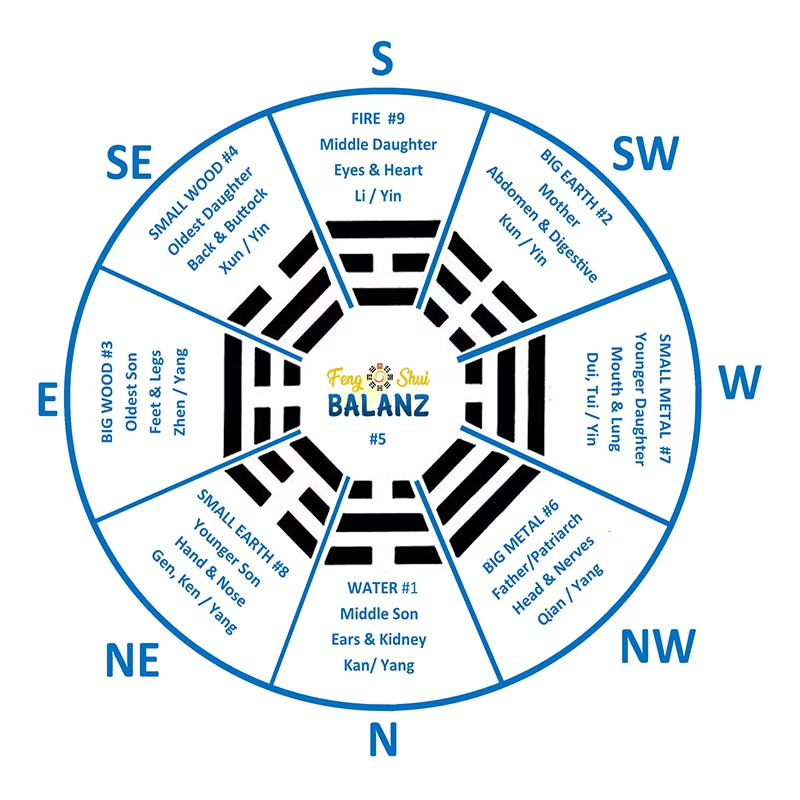 From my own observation and being a dog owner of over 15 years, I can tell that for animals, the order of birth does not apply. Let me explain shortly what I mean with the “order of birth.” Above, on the Pie-Chart, you can see that each 45 degrees Palace is associated with a family member. The Mother-Figure of the household governs the South-West. In a like manner, your children’s order depends on their age and birth dates.
In other words, let’s say you have a 12-year-old son and a 15-year-old daughter. The daughter belongs to the South-East Palace as “Oldest Daughter,” and the son belongs to the North-East Palace as “Younger Son.”
For Feng Shui for pets, this order does not apply and it does not matter how old or young the pets are. From my own experience and observation, the age ranking has to be dismissed and only the home palace sections comes into focus.
South-East & West Palace affects Female Pets

Also interesting: The Feng Shui Bagua Map in detail
From my experience as a dog owner for over 15 years, I can confidently say that the traditional Chinese family hierarchy (order of birth) doesn’t apply to animals. In Feng Shui for pets, the age or birth order of your pets doesn’t determine their energetic placement.
Each family member in traditional Feng Shui is associated with a specific palace according to their birth order. For instance, the mother governs the southwest, and the father occupies the northwest. Children’s birth orders place them in specific directional palaces, like a 12-year-old daughter in the West palace (Dui trigram) and a middle son in the North.
However, when it comes to pets, this hierarchy doesn’t apply. Age or rank doesn’t influence their association. From my observations, certain energy sections, like the West or Northeast, seem to have a stronger influence on female pets’ behavior. How do I know? Years of closely observing pets in my household, along with input from friends, family, and clients, have provided me with valuable insights and data.
If you’re not familiar with traditional Feng Shui, let me explain a bit further. Each home carries a permanent energy imprint, which is set into the structure once the roof and ceiling are enclosed. This imprint determines the long-term energetic dynamics (space-time principle) of the space.
In addition to these long-term energy patterns, we also have annual and monthly influences that shift the energy in each of the eight sections of the home, creating a dynamic and ever-changing energy setup throughout the year or month.
In general, any energy, whether positive or negative, will amplify its negative attributes when in a dominant relationship. Take the 7-3 energy combination as an example. Here, the metal star 7 exerts intense pressure on the wood star 3. If Star 3 is the annual star, the energy dynamic could indicate potential issues, like a dog bite, if left unaddressed.
Star 3 poses particular challenges for pets, as it is associated with arguments, fighting, and irritation. Under a 7-3 or 3-7 combination, a dog may become more aggressive or anxious. Furthermore, each star is associated with specific organs. Star 3, in particular, governs the nervous system, which could lead to behavioral issues or even physical conditions, like liver problems, in your pet.
Flying stars like star 5, star 7, and star 3 are generally considered negative and can cause both health and behavioral problems for pets.
Now, let’s say one of these harmful star combinations is present in the southeast or west palace of your home. You might think, “I don’t have a daughter, so I don’t need to worry about the area.” However, the energy will still affect your female pets, whether it’s a dog, cat, or bird. For the well-being of your animals, these areas need attention too, and Feng Shui for pets can help remedy these imbalances.
Cure and Enhance Pet Energy Flow
There are two key approaches to remedying or enhancing energy dynamics in your home, keeping both long-term and yearly energy influences in mind. If you notice an energy imbalance based on the 81 flying star combinations, place the appropriate element (Five Elements Theory) to nurture any energy under pressure and neutralize any negative influences.
On the other hand, if the energy combination is harmonious and positive, introduce additional enhancer elements to further amplify the beneficial dynamics.
Since every home has its unique energy chart, focus on the “Water Dragon Energy” for active yang rooms, like living rooms and dining areas. Pay attention to the “Mountain Dragon” Star in areas that are quieter, like your pet’s bedroom or sleeping spot.
To learn more about the terms “water dragon” and “mountain dragon,” please read the blog post below:
Water Star and Mountain Dragon Explained
Beyond the unseen energies, remember to check the layout and shape of the space itself. Adjusting the layout can help achieve a smooth flow of Qi. This means addressing sharp corners or exposed ceiling beams. Apply the same principles for your pets as you would for yourself, ensuring they are not exposed to inauspicious features like sha qi.
East, North, and North-East affects Male Pets
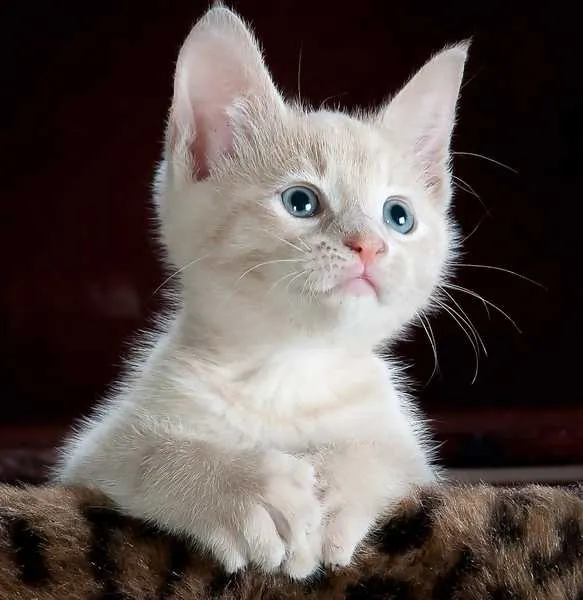
In Feng Shui, the North, North-East, and East palaces are traditionally linked to the son (whether the youngest, middle, or oldest). However, as previously mentioned, the age hierarchy doesn’t apply to pets. If you have only one male pet, your primary focus should be the East Palace. Still, it’s helpful to quickly assess the other two palaces as well to ensure balanced energy throughout your home.
For example, if you have a Flying Star combination of Stars 7-9 in any of these palaces (East, North, North-East), it could indicate that your pets are agitated or even engaging in conflict. The 7-9 combination is often associated with arguments, tension, and discord. These energies influence both humans and pets, so it’s crucial to pay attention to these patterns.
The previous example underscores the need to adjust the energy flow in each palace of your home. While it’s challenging to apply one-size-fits-all remedies, each home’s unique energy layout requires tailored solutions to ensure a harmonious environment for your pets.
Feng Shui for Pets: Tips to cure and enhance
Apply the same principles that balance the energies in female pets here. Pay attention to the proper shapes and forms within your space. Additionally, address any imbalances in the unseen energy pairings that may reside in these sections. A key piece of advice: the geometric center, where all eight energy sections meet (on the pie chart), is a non-physical point. It doesn’t occupy space but still influences the energy of the entire home.
In about 95% of homes, the geometric center tends to carry negative energy, subtly affecting all residents, including pets. For instance, if the center has a 2-5 combination (like a Period 8, SW2-facing home), it could trigger issues like digestive problems when activated.
Please review the energy map and identify the geometric center of your home. If it’s in an area where your pet spends a lot of time, like playing or resting, it could unintentionally activate the negative central energies. The simple solution is to keep the area quiet and unobstructed, minimizing exposure to these subtle imbalances.
Feng Shui for Dogs and Cats: Attracting Unique Energies
You should also read: Know your Feng Shui Kua Lucky Number and direction
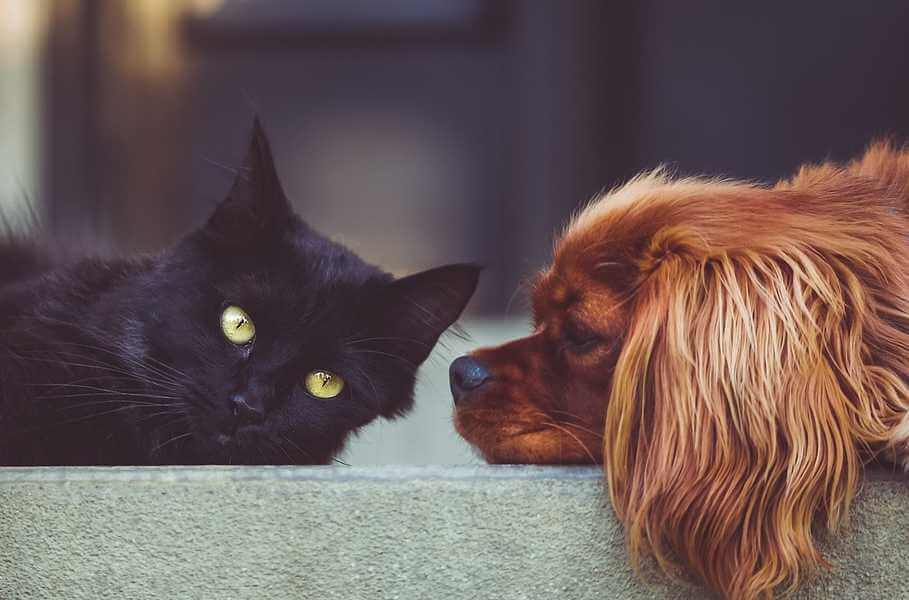
Over the years, I’ve made some intriguing observations while watching our dog and my friend’s cats. I’ve noticed that cats, for reasons I’m still unsure of, tend to be drawn to specific negative Star energies like the Star 5-2, Star 2-5, or Star 7-9 combinations. While I haven’t yet pinpointed the cause, it’s been a consistent pattern in my experience.
To improve their well-being, I suggest checking your home energy chart and trying to guide your cat to areas that are influenced by more positive energy. You can also block off these negative energy corners with plants or household items. These simple changes can help boost your cat’s overall energy and health.
On the other hand, when it comes to Feng Shui for dogs, they don’t seem to be attracted to these negative energy zones the way cats are.
I’ve mapped out our living room and a few of my friends’ spaces using a small Tai Chi micro-energy chart. The chart divides each energy palace (like West, NW, East, etc.) into smaller, more detailed sectional energy zones within the room. The approach offers a deeper, micro-level perspective compared to the broader, macro view of the entire sector.
With such insight, I can now see exactly which unseen energy dynamics each pet gravitates toward. According to my observations, the environments varied based on the different room setups in our homes. Interestingly, in about 96% of cases, the cats seemed drawn to energy zones governed by Star 5 or Star 2.
To further test, I tried enticing my dog with some tasty treats and lured her into these unfavorable energy areas. Despite her love for treats, she quickly ate them and then returned to her preferred spot to sleep and relax. She completely avoids these negative areas, making a wide circle around them.
After years of monitoring her and receiving feedback from other pet owners, I’ve realized that our female dog has a remarkable ability to sense harmful electromagnetic energy. She consistently seeks the more positive energy zones in our home.
A quick tip: Pay attention to your pet’s behavior. If they avoid certain spots or seem uneasy in specific areas, it could be a sign of either auspicious or inauspicious energy present in your home.
Feng Shui for Pets: Impact of Unbalanced Energy

If the Feng Shui for cats and dogs is unbalanced, it can lead to various negative behavior patterns. For example, if your pet is sick or exhibits aggression, it might be worth considering the impact of Classical Feng Shui as well. While health issues can stem from other factors, such as harmful EMF radiation from Wi-Fi or cell phones, it’s always a good idea to keep Feng Shui in mind when addressing your pet’s well-being.
- Cancer suddenly develops
- Joint problems
- Sudden aggressive behavior
- Ear problems
- Feeling stressed or fearful
Remember the following when doing Feng Shui for pets:
- Your permanent home energy will also affect your pets
- The annual Flying Star energy also impacts your little family members
- Keep your pets always in positive energy palaces in your home
- If negative energy exists, apply remedies and cures
- Survey the behavior of your pet and cross-check the energy chart of your home (permanent & annual)
- Remember that each palace is associated with different body parts that can cause health problems
- Give your animals high quality food. Many foods do have low grade ingredients (byproducts of chicken etc.) which I consider junk-food.
- It is worth to take a look at the ingredients list on the backside of the pet food. The ingredients listed at fist are the ones with the highest quantity. For this purpose, check if potatoes, chicken, beef, or other high-quality ingredients are listed right in the beginning. It will give you a clue about the overall quality of the pet food.
Feng Shui for Kids with Pet Anxiety
In traditional Chinese thought, fear is not merely an emotional reaction but a sign that Qi—the life force—has become disturbed or depleted. According to TCM, fear is associated with the kidney system, which governs courage, willpower, and our response to perceived threats. When a child shows fear toward animals, particularly dogs, the underlying cause often involves weakened kidney qi, environmental overstimulation, or insufficient grounding of Earth energy.
Feng Shui offers a gentle, supportive approach to help harmonize the child’s surroundings and assist in emotional regulation. Below are nine practical strategies, each paired with traditional interpretations of the Qi movement and the Five Element principles.
1. Allow Observation from a Safe Distance
Let the child observe calm dogs at a distance, without pressure to interact.
Feng Shui Principle: This practice honors the child’s wood element, allowing emotions to move and unfold gradually, like a sapling growing in spring. Giving space for Qi to circulate freely helps reduce internal contraction caused by fear.
2. Demonstrate Calm, Gentle Human-Animal Interaction
Let the child watch others engaging peacefully with dogs.
Traditional Insight: Observing positive interactions allows the child’s Heart Qi to soften and open. In Five Element theory, the heart belongs to fire and is soothed by stable earth energy. Calm presence and modeling create resonance within the child’s own energy field.
3. Avoid Direct Exposure or Forced Contact
Do not pressure the child into touching or approaching a dog before they are ready.
Feng Shui Wisdom: Forcing creates resistance. Fear signals that the Qi is retreating. Allow time for Yin to strengthen naturally. In TCM, sudden shocks harm the kidneys, which store fear. The stillness supports the kidneys’ recovery.
4. Introduce Symbolic Forms such as Toy Dogs or Figurines
Provide comforting representations of dogs through toys, cushions, or drawings.
Energetic Function: Symbolic objects carry intention. Soft, friendly forms gently introduce the idea of a dog in a non-threatening way. Doing so supports grounding through the Earth element, helping your child safely connect with the concept of the animal.
5. Stabilize and Purify the Child’s Bedroom
Ensure the bedroom is orderly, with minimal noise, clutter, or visual chaos.
Feng Shui Practice: The child’s personal space reflects their internal state. To calm excess Yang or scattered Qi, reduce electronic devices, avoid mirrors facing the bed, and anchor the bed against a solid wall to strengthen supportive Qi flow.
In addition, balance the unseen energetic combinations within your child’s bedroom to create a nurturing environment. Each corner of the room carries its own unique energy, influenced by both long-term and yearly shifts. By aligning these hidden energies and ensuring they support each other, you can enhance the flow of positive qi.
A well-balanced space promotes emotional stability, restful sleep, and overall well-being for your child. The harmonious energy not only supports their growth but also creates a safe and comforting environment conducive to development.
6. Use Naming and Storytelling to Build Connection
Let the child name their toy dog and imagine stories around it.
Elemental Support: Storytelling engages the Shen (spirit) housed in the heart. The process warms the Fire element, helping the child emotionally connect with the idea of companionship in a way that feels safe and joyful.
7. Encourage Drawing or Painting of Peaceful Animals
Invite the child to draw animals they like or imagine friendly dogs.
Qi Movement Tool: Creative expression is a healthy outlet for liver qi, which governs imagination, planning, and emotional flow. Drawing also strengthens the Wood element, restoring emotional flexibility.
8. Select Books with Gentle Animal Themes
Choose stories that showcase kindness, compassion, and harmonious relationships between humans and dogs.
Feng Shui Application: In Classical Feng Shui, the content of the books can influence the flow of qi within the body, particularly by stimulating the heart and liver organs, both of which are associated with emotional well-being and balance. Positive, nurturing themes help soothe the heart’s qi, promoting calmness and emotional stability. Avoid books with aggressive or distressing imagery, as they could activate the liver qi in a negative way, potentially leading to irritability or stress.
9. Acknowledge Small Progress Respectfully
Support the child’s small steps forward without overpraise or pressure.
TCM View: Encouragement without exaggeration nourishes the Spleen Qi, which governs self-trust and stability. Gentle words and a steady presence help the child rebuild internal confidence slowly but deeply.
Final Thoughts
True Feng Shui is not about decoration but about recognizing and harmonizing the qi flow between humans and their environment. When a child fears animals, the goal is not to eliminate fear but to support the slow rebuilding of internal strength. By shaping their surroundings thoughtfully and responding to their energy respectfully, we help create the conditions for courage to grow and for a future friendship with pets to blossom in its time.
FINAL WORD
I hope you’ve enjoyed my brief dive into the world of pets and Feng Shui. Interestingly, there’s not much written about how Feng Shui energy affects our animals, even though they play such an important role in our lives.
As beloved family members who bring us so much joy, it’s worth paying attention to how the energy in our homes can impact their well-being. So, take good care of your furry (or not-so-furry) companions, and remember that a little Feng Shui can go a long way in keeping them happy and healthy.

July 2, 2025
By FengShuiBalanz
With over 9 years of experience in classical Feng Shui, our expertise centers on Flying Stars and Form School. Trained by respected Grand Masters across Asia, the USA, and Europe, we’ve delivered expert consultations to hundreds of clients. Driven by a deep passion for guiding others, our approach emphasizes mentorship, helping individuals grasp the authentic teachings of Feng Shui. The teaching style is patient and approachable, blending traditional wisdom with practical, real-world strategies that deliver meaningful results.




Hi there, I read your article re Fengshui and pets. In thus case, The Annual Flying Stars afflictions will also affect our pets? What if remedies or cures have been implemented in the Five Yellow sector (East) in 2020 but we cannot avoid using it as it’s the location of our study? Does using this area with remedy/cure implemented affect our male pet? Thank you
Hi, thanks for taking the time to comment on the post. Yes, this is correct, both the permanent energy AND Annual Flying Stars energy will affect pets as well. In a typical case, if you have remedied the East sector for the Five Yellow Star, you and your male pet should be ok. However, it all depends on what kind of permanent energy also resides in your East sector. Let’s take me, for example. I have part of my office in the East sector with permanent and annual energy of Star Yellow Five. I had to move all essential things out of the sector as the energy is too strong to remedy. I noticed a lot of hick-ups. Coming back to your case, if your permanent energy is ok and you have good remedies here, you and your male pet should be ok for the year.
Hi there, if the flying stars change every month, year, and 20 year cycle, then I’m not sure about cats choosing negative areas. My female cat currently loves the east to spend most of her time, sometimes southwest, both auspicious directions for period 9. I think part of it is because the east was the last area that she spent time with her dad cat, our most recently dearly departed pet (he had kidney disease but didn’t spend much time in the north, also possibly had intestinal cancer/southwest area). They both loved these 2 areas.
My dearly departed girlcats loved my room, regardless of the month, year, or decade lol. The bagua surprised me, when I realized that it was accurate, about how the daughter cat passed away of oral cancer, and her mom had cancer in her abdominal area.
Sorry for the sad topic, but please consider writing an article on pet burial feng shui, grieving feng shui, and/or pet health issues according to feng shui.
If possible, please answer:
1. From a feng shui perspective, is it okay or is it inauspicious to bury a pet on top of another deceased pet’s grave, due to limited space in the burial area?
2. I’m curious about what the feng shui perspective is on what could lead to these following causes of death for all my pets, looking back over the years (it’s a complex topic, so even if you answer only some of these, it’s still appreciated):
– cancers: intestinal (with sepsis), mammary, oral, bladder. I know this article mentions wifi, but anything else, ie too much of a certain element?
– kidney disease
– fatal asthma attack (small fire outside about a month prior, unavoidable smoke inhalation but otherwise safe/no injuries. Bad air quality is a form of sha chi.)
– heart disease complication, FATE (Feline Arterial Thromboembolism, a blood clot causing sudden paralysis and pain)
Thank you for reading and for your advice.
I agree that there are still many unknown factors, and it’s true that observations about a cat’s behavior in negative sectors may not apply to every case. About a month ago, we adopted two new kittens, and I’m currently observing their behavior. I’ll update my blog post if I find any new insights worth sharing.
One thing I can state with full confidence, however, is that cats, like humans, can develop certain behavioral or health issues depending on their energetic environment. For instance, if a pet (whether a cat or dog) spends a long time in the area governed by the unremedied Star 3, they often become more aggressive, moody, and prone to biting or scratching.
Regarding your question about pet health concerns: just as with humans, these influences are largely the same. For example, when a 6–9 star combination appears in the South sector, it can indicate potential lung or head-related issues (such as Alzheimer’s, Asthma). This is because the Fire Star 9 exerts pressure on the Metal Star 6, creating an imbalance that can manifest in both humans and animals who spend extended periods of time in that area. In general, whatever effects the annual and monthly influences with the permanent energy chart brings to the sectors will impact both people and their pets.
When it comes to Star 3, humans may experience issues like arguments, gossip, or legal problems, while pets are more likely to display psychological or behavioral symptoms such as irritability, defiance, or rebelliousness toward their owners.
Pet Burial Feng Shui:
Choose a bright, sunny location for your pet’s burial, and avoid areas with negative structural features (form school) such as sharp corners, poison arrows or T-junctions. It will ensure a peaceful resting place for your pet.
Short Answers:
1. You can bury one pet above another, but make sure to leave enough soil between them.
2. Cancer is associated with Star 5 (whether it appears in the permanent, annual, monthly, or daily chart), and it can also arise if Star 5 is located in the mountain dragon position of your home’s sitting sector, or found at the geometric center and being overly activated by wrong form or movement.
3. The kidneys and bladder are linked to Star 1. Issues may arise if Star 1 is under pressure from certain combinations, such as the 1–2 pairing.
4. Mammary cancer corresponds to Star 4.
5. Asthma is connected to Star 6, and poor air quality is considered a form of sha qi (negative energy).
In summary, you can conduct your own research by examining how each body organ relates to the flying star energies. Generally, if multiple cancer-related issues occur within a home, Star 5 is the primary energy to watch for.
Thank you so much! Was going through my bookmarks, and just revisited this now! For me, the feng shui aspect of pet health can be emotionally difficult, as I can only revisit it once in a while, but when I feel up to it, it’s fascinating to look into. Interested to look into how body organ health is viewed in the flying star perspective.
I really do appreciate you answering my long comment and questions. Have a great day.